Chris O'Reilly: How the school gym took me to a career in global sports media
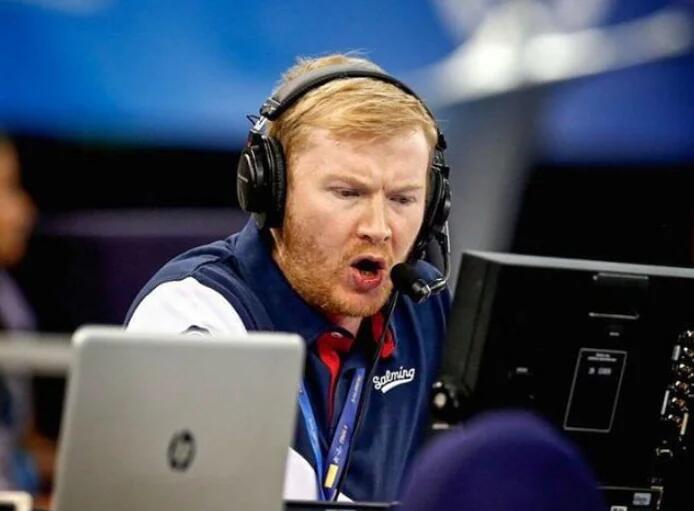
Celebrating 50 years of handball in Ireland isn't just about the matches played on home soil—it's about how the sport has shaped lives and reached the global stage. From after-school training sessions in Maynooth to commentating on elite European games, Chris O’Reilly’s journey illustrates how the grassroots community of Irish handball can launch individuals into international sports broadcasting.
By Chris O’Reilly, Ex-Ireland International, EHF Commentator and Sports Journalist
Sports journalism and broadcasting is an industry that’s notoriously difficult to crack. As of today, I’ve been lucky enough to have had more than a decade working at the top tier of European sports media. But I didn't start in a traditional newsroom or press box … For me, it all began on a secondary school court in Maynooth.
How we watched sport in 2000
I was somewhat aware of handball. I’d seen games on TV during the 2000 Sydney Olympics and remember thinking, ‘this looks cool.’ My playing career started at age 11 when I started secondary school. A Ukrainian family had moved to the area, and their wonderful Mum, Olena Karpenko, offered to teach handball twice a week after school. I’d made friends with her kids, so a bunch of us duly joined in.
Why handball felt different to GAA
What started as a way to keep occupied quickly turned into a genuine passion. We were thrown straight into the deep end, too. After a few months of training, we went off to Tallaght to play Lughnasa - an established club. Predictably, we got hammered.
But it sparked something in us. We kept at it.
Unlike Gaelic football, handball felt fast at all times - every player had to contribute. It also gave us a chance to travel. Rather than just competing within our own county, we were playing across Meath, Sligo and Galway, then abroad in places like Liverpool and Prague.
By 16 I was driving to Dublin three to four times a week to train with the Irish men’s national team. Making the squad for the 2007 Challenge Trophy in Luxembourg was a defining moment. I took the final spot as a developing player, and stayed for the next 12 years.
An unplanned leap…
After university, I got an offer from a German team to join them semi-professionally. I thought I’d stay for a couple of years, but fate had different ideas, and at the end of the first season an unexpected injury meant I couldn’t play.
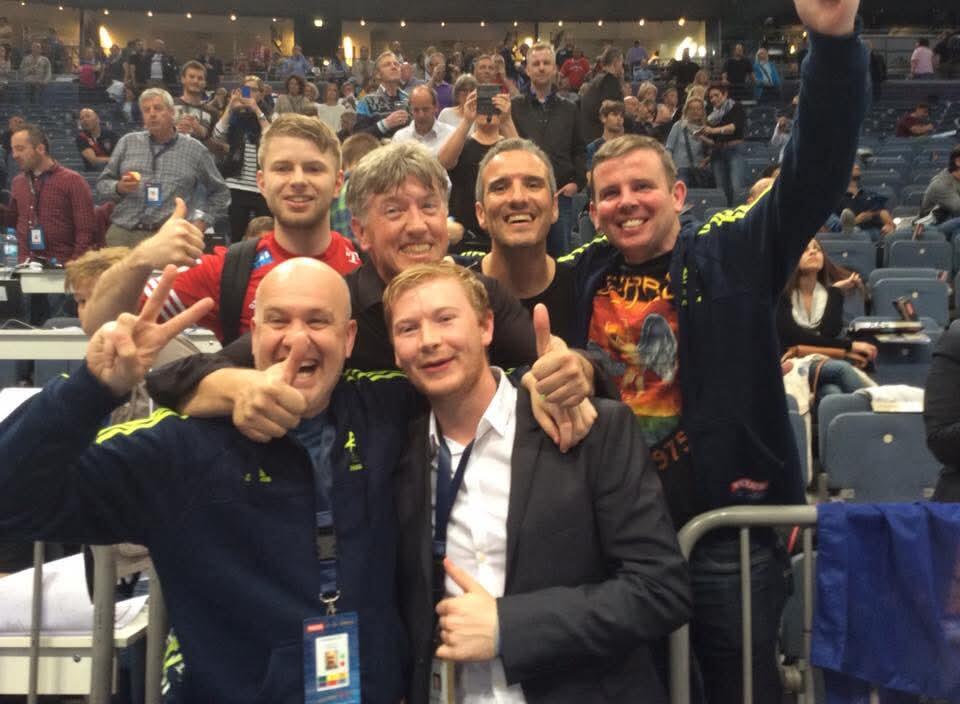
But, as one door closed, another opened. Brian Campion, a Sligo man working part-time for the European Handball Federation (EHF) in Vienna, told me about an opening in their media department. It felt like a way to stay involved in handball and so, after I got the job, I packed up my things and moved to Austria.
Stepping into the EHF media team felt like a dream. In those early days, social media and digital editorial for federations were still a wild west. Working in an international, sports-obsessed office alongside colleagues from across Europe, I realised that I was incredibly lucky that my love for handball had given me a viable path into sports media.
From federations to freelancing
I began leaning into commentary and digital broadcasting. From hosting informal Google Hangouts and livestreams to taking on world-feed commentary as the EHF expanded its English-language global output, the broadcasting side of my career took off. In 2017, I took the leap into full-time freelancing and relocated to Gothenburg, Sweden. It seemed like a cool place to live, and is another handball-obsessed nation.
Commentary is a tough gig - you're only as good as your last game - and longevity relies on staying connected with an audience. But as media consumption has shifted from terrestrial TV to global on-demand streaming platforms, our reach has expanded in a big way. What that means for handball is connectivity on a global scale. It’s not just an 11.30pm game on Eurosport or 5 minutes at the Olympics. Anyone who wants to find the sport now, can.
I was once recognised in Gothenburg by a fan from Mexico who grew up listening to my Champions League commentary. I think it’s pretty special that the English-language broadcast has become a gateway for even more fans around the world.
Looking Forward: A Global Future
Today, broadcasting makes up half of my professional life, alongside work in culture and festival direction. As for the future of Irish handball, the groundwork being laid today at the grassroots level is vital. Building from the bottom up is the only way to ensure sustainable success. Looking back, playing for the national team from 2007 to 2019 - which spanned a third of my life - and every major career pivot since then, I can trace back to Olena’s after-school sessions in Maynooth.
Seeing Ireland compete on the world stage in the coming decade is a big dream - but it’s absolutely achievable. We’ve got what it takes.


Cookie Policy I Privacy & Data Protection
© Olympic Handball Ireland | Produced by
